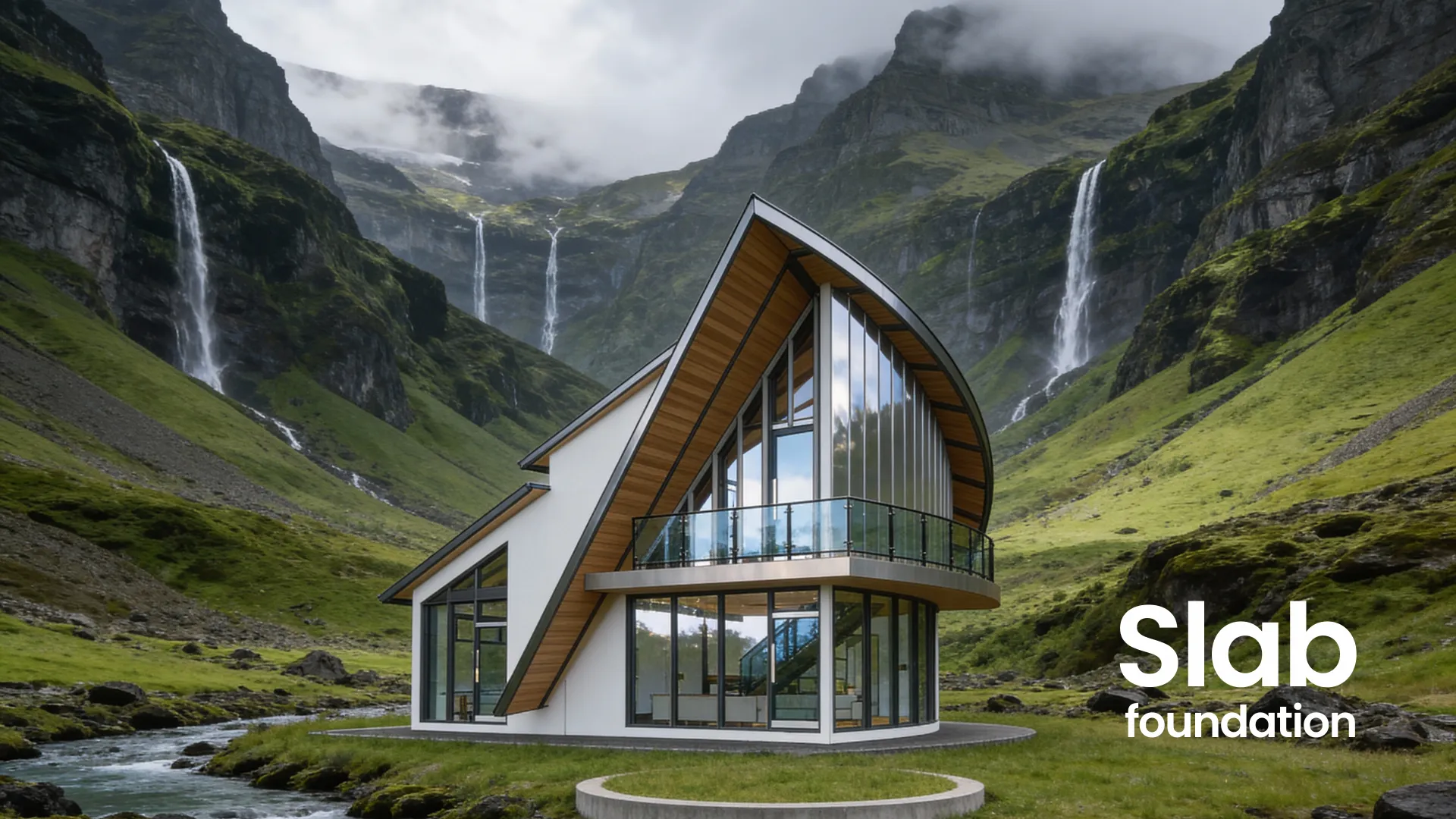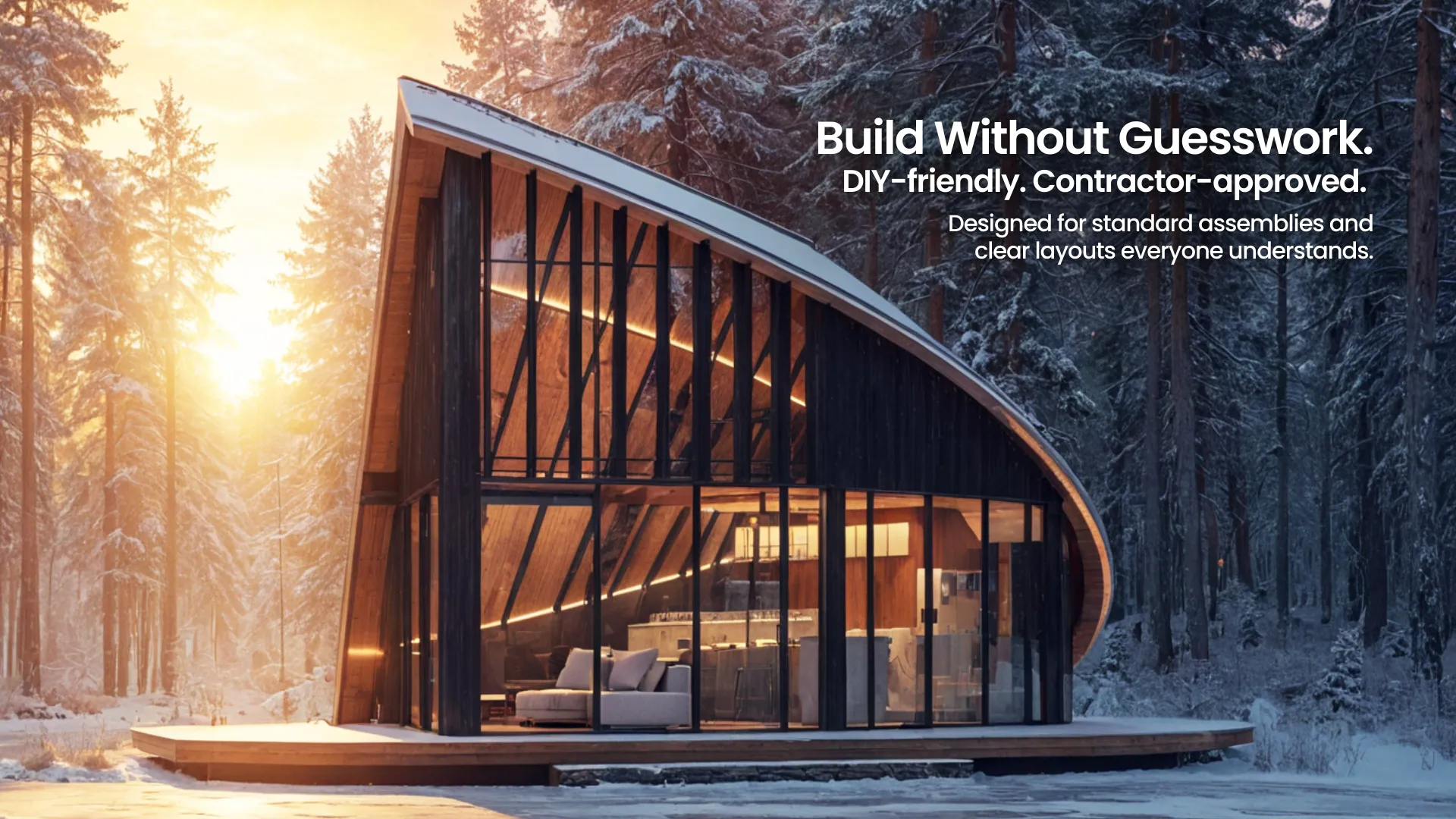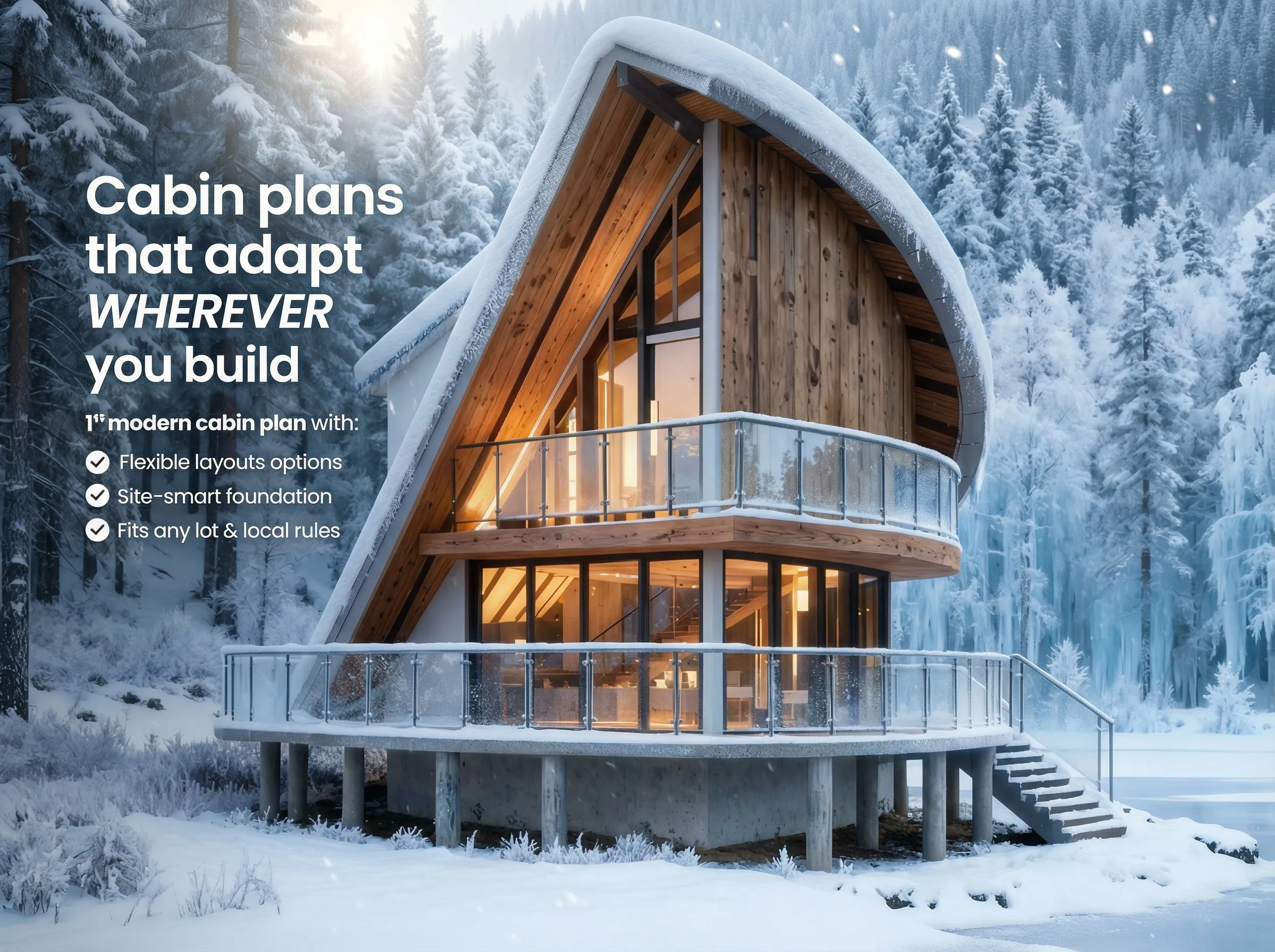
Most houses are drawn for daylight. This one was drawn for the hour after sunset, when the glazing turns black and the interior becomes a lantern visible from the road.
Every project starts with a single question. For this one, it was: what happens to a glass house at night? Most contemporary designs show beautifully in a daylight render and turn into a black hole the moment the sun drops. We wanted to turn that inside out.
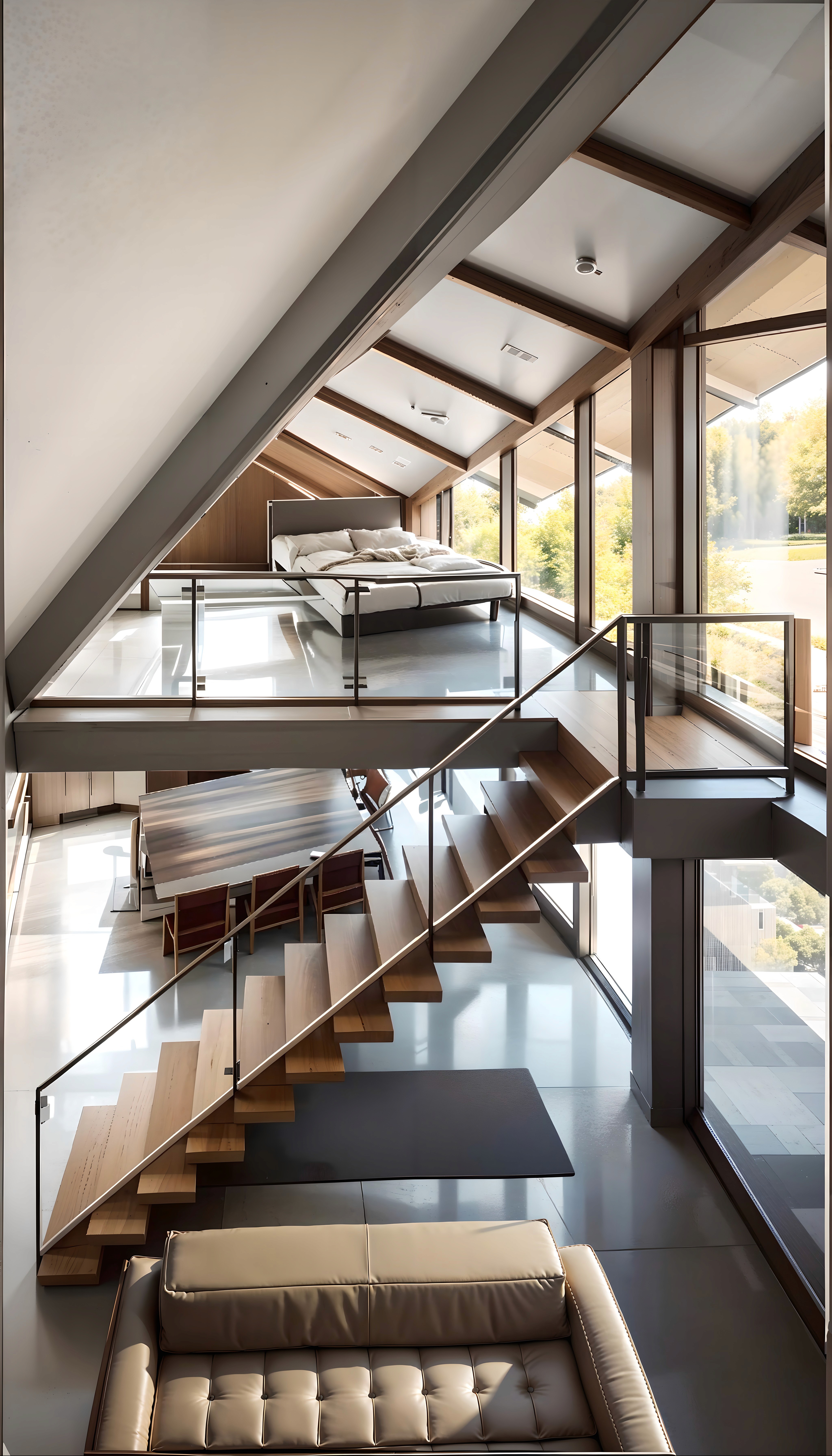
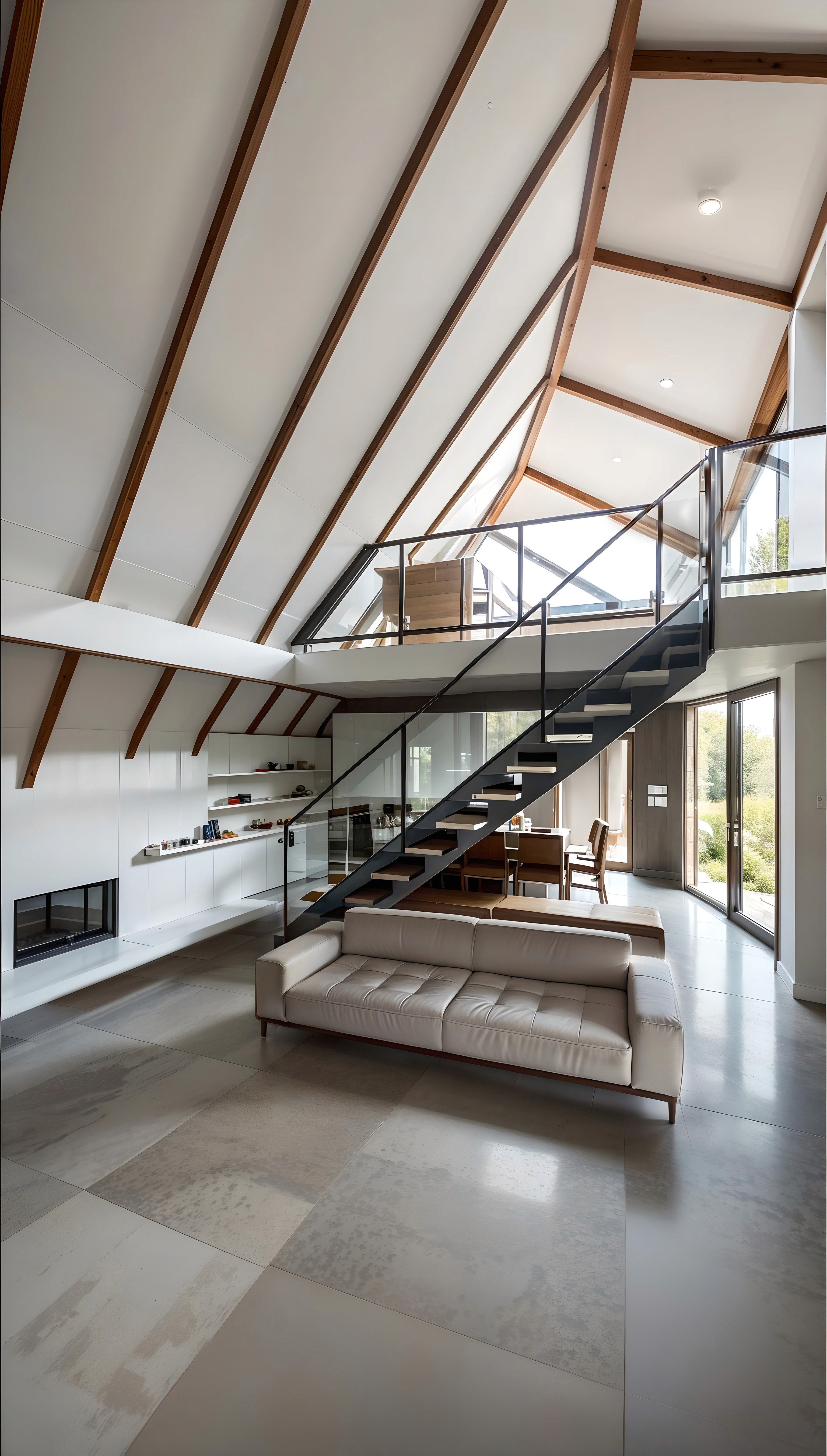
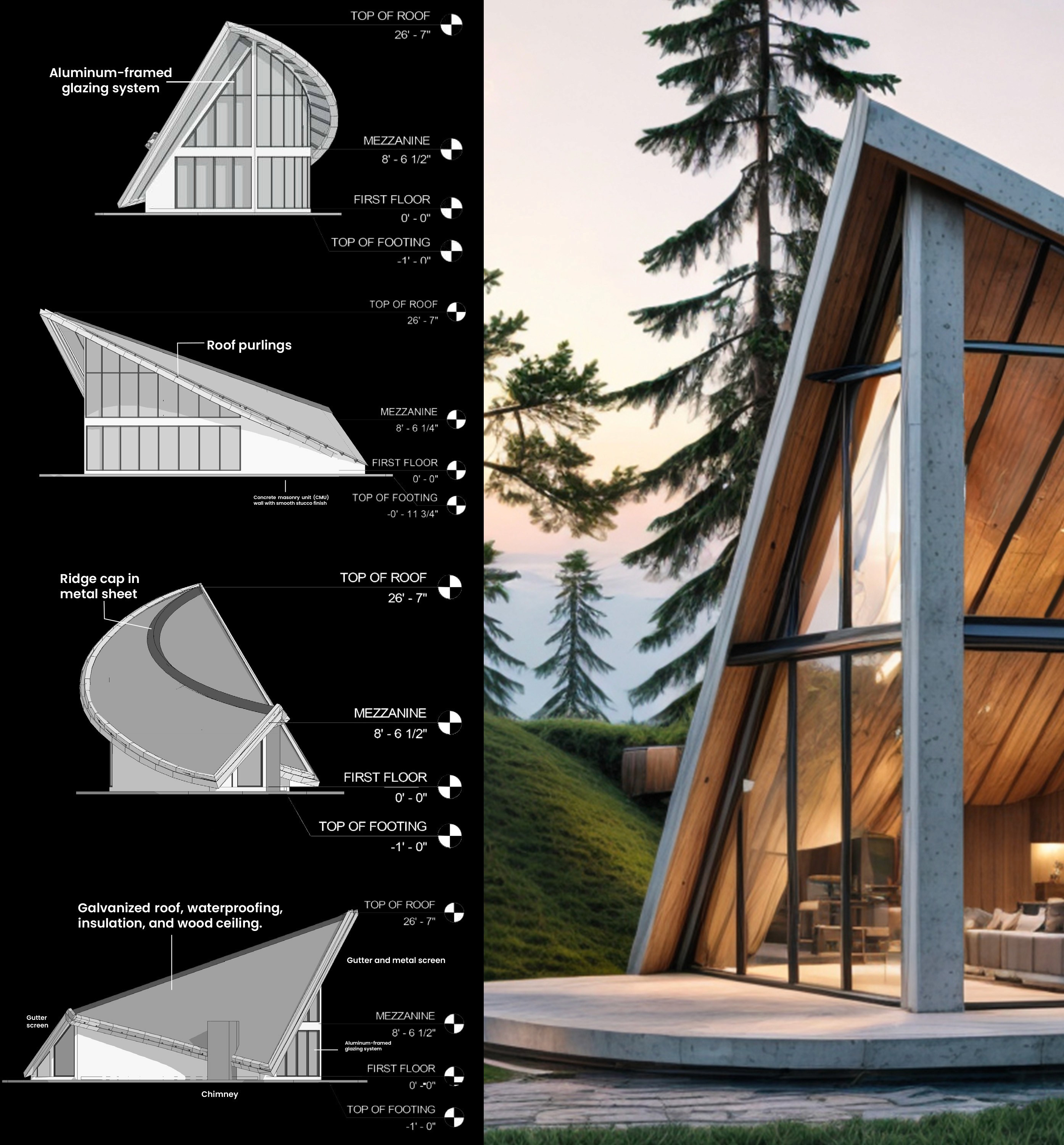
The plan is organized around a low ember-colored ceiling (warm oak, amber light) that pulls the interior glow out through the glazing and across the deck. When the interior lights are on, the house reads as a single continuous warm plane in the darkness.
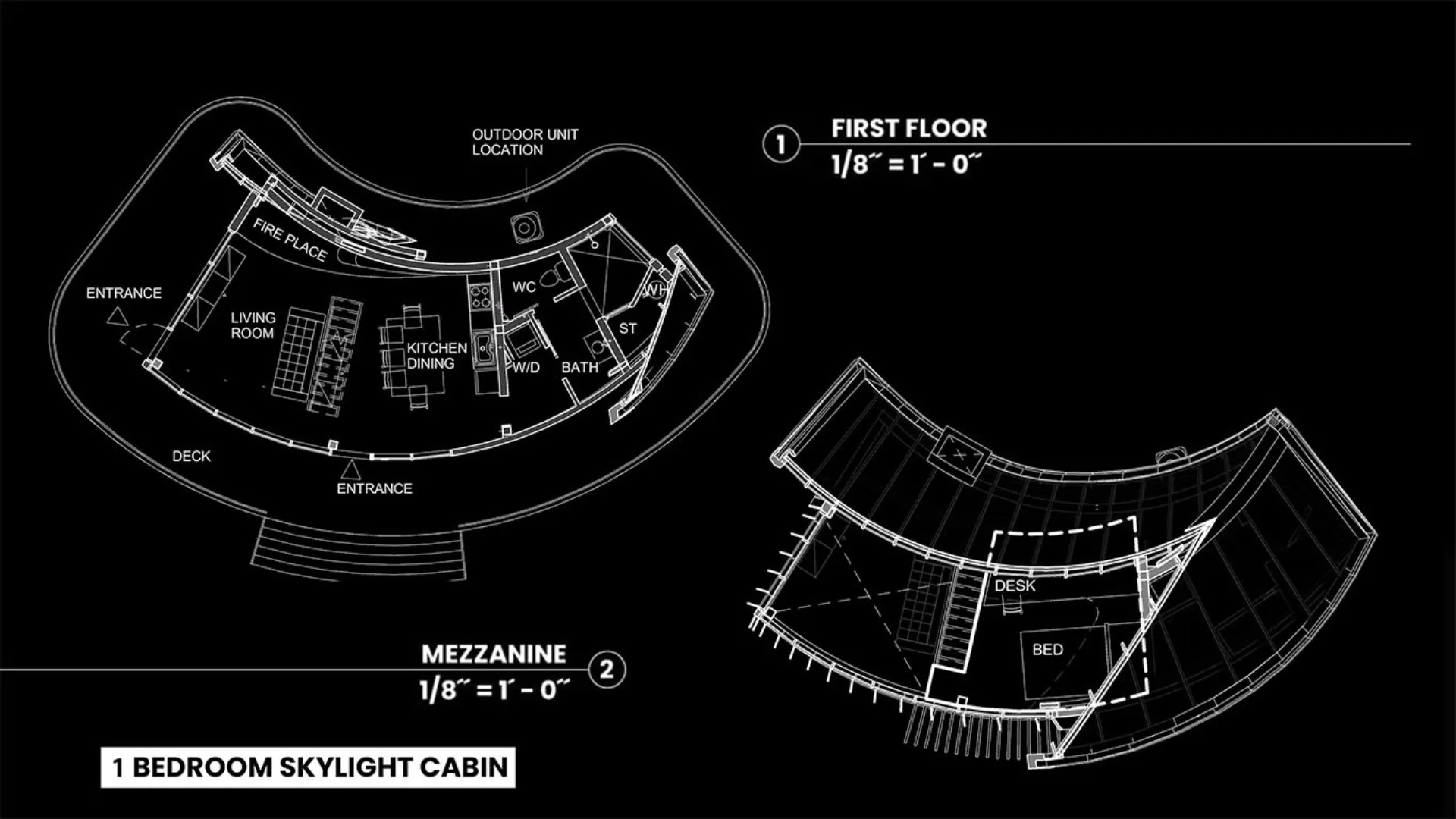
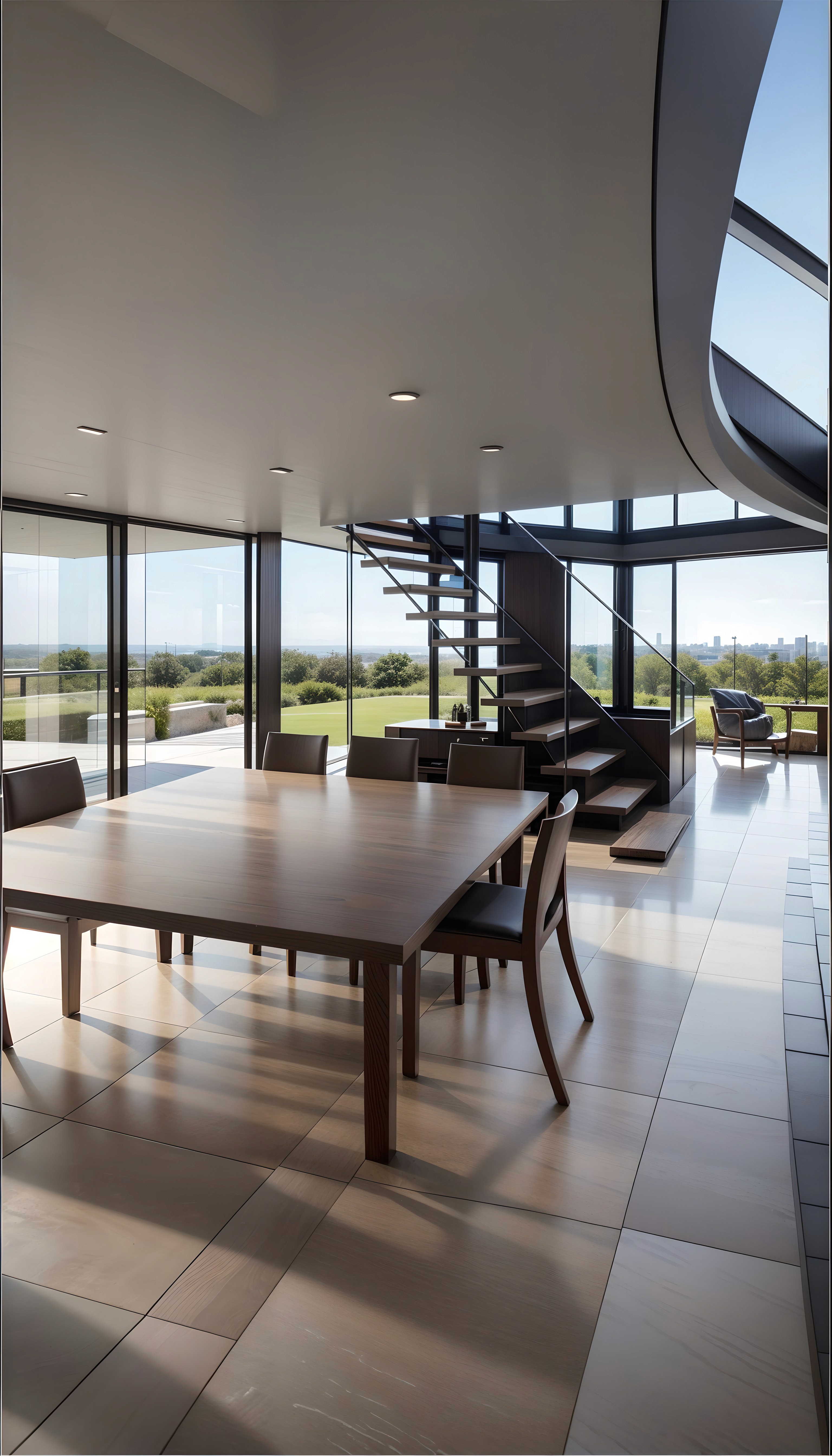
The biggest objection to a glass house is also the most practical: everyone can see in. We solved it with the site. The glazed facades face the landscape; the entry and bathrooms face the street. The only view into the house is from the wilderness, where no one is standing.
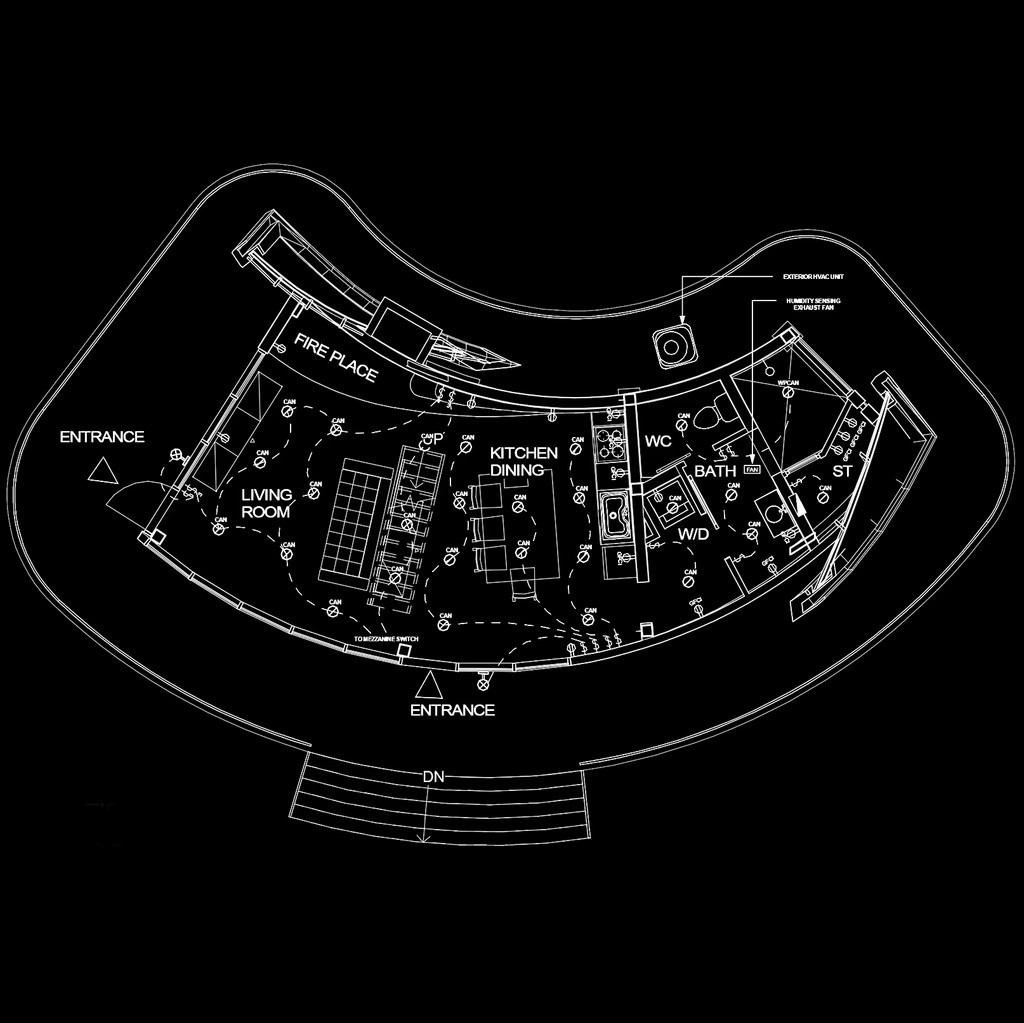
The interior uses exactly three fixture types: a warm downlight at the perimeter, a pendant over the dining table, and a recessed cove along the ceiling. Nothing else. The architecture does the rest.